
Mandar, Author at Great Manager Institute® - Page 3 of 7

Last 50 days to participate in the Great People Manager Study®—be among India’s Top Great People Managers™. Participate now.

Why does measuring leadership capabilities matter?

The term ‘leader’ is believed to have originated from the old English word ‘læden’, which means to guide. Leadership and leading are ongoing processes. Becoming a leader doesn’t mean one won’t be evaluated, checked or held accountable anymore. If anything, leaders come under a microscopic lens and to some extent have to prove themselves worthy of the position they have been promoted to. Leaders must hold themselves to a higher standard and organisations/companies should also create ways through which leadership capabilities are measured.

Measuring leadership capabilities matters in every area of our life, be it in school when students are given specific positions of responsibility. For example- prefects, house captains, sports captains, debate team captains etcetera. They have to prove themselves worthy and then are granted the leadership role. They’re evaluated by teachers, students, and team members throughout their tenure and if they aren’t up to the mark, they’re replaced.

In the corporate world, however, it is slightly difficult for organisations/companies to simply replace or remove a leader. It not only shows an increase in staff turnover, but it also reduces morale and weighs heavily on a particular business. Therefore, companies no matter how big or small cannot afford to lose out on leaders. Instead, it must keep certain measures in place.

To succeed and grow in the competitive business world, there is a clear-cut need for the assessment of leaders and leadership qualities.

What is Leadership Measurement?

It is a comprehensive procedure to identify and evaluate a leader’s abilities as they are involved in influencing, leading, directing and motivating their teammates. It is required as leadership skills ‘oil the wheels of a company’s growth and success. The better a company knows its leaders, strengths and weaknesses, the more time and money can be invested in helping it perform better and thus helping everyone perform well.

It matters as it helps in

Identifying and Creating Effective Leaders

To find leaders companies must already have a list of what they’re looking for a leader. Making a list of basic skills like- the ability to work under pressure, conflict resolution skills, unbiased attitude/behaviour and other specialisations can help companies find and create an effective leader. The program will also help in working on the weaknesses of potential leaders and once leaders have been equipped with the important tools, they can take up specific projects and see them through.

Planning for the Future

We continue to live in uncertain times and we make plans for the future in every area of our lives. Companies must do the same. Under fortunate circumstances, a leadership position opens up when they reach the age of retirement.

In such cases, companies have time to prepare for the future, invest in a junior employee, and equip them to succeed someone else. But with all that is happening around us, companies must not wait for a leader’s retirement age to come close. It not only wastes time but also shows the company’s casual and laid-back attitude. Keeping a leadership measure in place matters here as it will ensure smooth easy transitioning and smooth sailing of the company.

Setting a Standard

Ensuring that a leader’s or all leaders’ capabilities are regularly measured sends a message. Everyone loves positive feedback, we love to hear praises for the work that we do. It primarily makes us feel good and encourages us to do better.

Keeping certain measures in place leads to the creation of a cycle, employees know that they are being assessed and measured which urges them to do better and when they perform well they are rewarded in different ways. It could be in the form of positive feedback, a trophy, a raise or a promotion. Therefore, leadership measurement helps ensure that all employees perform well.

Implementing a Positive Work Environment

I would like to start this point with an example. Companies like Great Manager Institute ® and Great Place to Work ® give importance to their work environment. Having a healthy, positive work culture is at the core of their being.  They keep up this environment by assessing their leader’s capabilities to follow the company’s principles. A leader’s ability to implement positivity is a part of their Leadership Measurement Program. It allows them to check whether or not their leaders are adhering to the same.

Anticipating and Eliminating Risks

It makes an organisation’s priorities crystal clear. If you’re trying to create a culture of accountability, adding it to the company roster is a great way to start. Showcasing it as something that your organisation values are the best way to show employees that you’re serious about it. If you consider accountability a core value, it’s easier to hold your employees to it. Your expectations from them will be clear from their first day and vice versa. For example, when it comes time to conduct a performance review with a direct report, you can discuss if they’re living out the company’s core values. If they’re not acting accountable, you’ll have the perfect opportunity to encourage change.

Leading By Example

If you’re trying to create a culture of accountability, adding it to the company roster is a great way to start. Showcasing it as something that your organisation values is the best way to show employees that you’re serious about it. If you consider accountability a core value, it’s easier to hold your employees to it. Your expectations from them will be clear from their first day and vice versa. For example, when it comes time to conduct a performance review with a direct report, you can discuss if they’re living out the company’s core values. If they’re not acting accountable, you’ll have the perfect opportunity to encourage change.

Let Accountability Trickle Down

Everyone isn’t equipped to be a project manager or leader. However, every employee should have a sense of accountability and responsibility towards their roles. To be responsible and accountable, employees need to have their own individual goals and performance metrics. For example, you and your team have begun a new project and one of the team members isn’t ready to lead a whole campaign, but they can be responsible for certain tasks related to the bigger project.

You can help them by setting goals like, “write four emails with a 20% open rate.” This goal contributes to the overall campaign, but they can have total ownership over the results. They can write the emails, build them in the email software, and hit send. If the emails don’t perform, the marketing coordinator can then take full responsibility for the problem or error and try again.

Encourage and Celebrate Employees.

The measurement of leadership capabilities matters in this area the most. Finding potential leaders is not and should not be the sole concern of a company. Assessing and eliminating risks if need be should also be a priority. Ineffective leaders, or leaders who don’t suit your brand can cause major damage. Not identifying them or not measuring leaders can lead to poor decision-making, poor performances, losses, negativity and decreased productivity to name a few consequences.

The above-mentioned points are a few reasons why measuring leaders and their performance matters and are important. There are various other reasons for capabilities to be measured. It is important for all of us as we cannot stay in one place, in one stage in one step of our lives. Individually, we all must assess and measure our capabilities. We must not be disappointed by our negative results (if any) but must see them as an opportunity to work on ourselves and move forward. Companies must encourage assessments and measurement of the capabilities and performances of all employees as it is the only way to move forward and succeed.

Creating a Culture of Accountability in the Workplace

In simple words, accountability means the willingness to accept responsibility for your actions. Taking responsibility for your actions or following up on what you said you would do is considered a positive characteristic and is needed, especially in the workplace. A culture of accountability is one in which employees are held accountable for the completion of tasks and for working together to achieve goals and solve problems. Accountability means showing up and doing the things you committed to. It’s about taking personal responsibility for your work, trusting your teammates and knowing that you can count on each other for the completion of tasks. Such a  culture involves clear expectations and goals, open lines of communication and strong leadership.

Why must we create a culture of accountability and what does it look like?

It is a characteristic trait that cannot be ignored and inculcation of the same must be encouraged at all levels. Everyone working for an organisation, right from say an intern or a fresh out of college employee to the founder, director or anyone who holds a powerful position. Being an accountable employee breeds positive results. As a manager or a boss, your employees trust you they know that they can rely on you. In terms of work, accountability breeds productivity and completion of tasks/projects on time. It develops better relationships and eliminates surprises and at times hostility as well.

If accountability isn’t part of workplace culture, the organisation will face issues in employee performance and engagement. Plus, if employees can always escape criticism by making excuses, they won’t grow. They won’t feel compelled to do better for their teams. Accountability in the workplace is a necessity as both businesses and individuals — need to be outcome-focused. Whatever your goal may be, no matter how big or small you won’t be able to accomplish it without accountability. 

In addition, employees require clear communication to thrive. They need to know what is expected of them and without those expectations, employee engagement will drop — and if employees aren’t engaged, studies suggest that they may quit.. A lack of accountability will make that problem worse. If you want to boost engagement, performance, and job satisfaction, employee accountability must be your top priority. Accountability doesn’t mean you pick someone to place the blame on. Instead, you put in efforts to create a culture of accountability that rewards employees for taking personal responsibility. If you do that, you’ll experience the endless benefits of accountability in the workplace.

It isn’t just about owning up to mistakes and learning from them, it’s more than laying out your contributions to the team or organisation. It also includes being transparent, that you have no problems in say for example:- giving updates on a particular task being performed, you don’t feel that ‘oh! Why should I answer to them’, It shows that you’re not egotistical and makes it easier for others to work with you. Your response or commitment makes everyone else follow in terms of giving updates or answering questions when asked.

What does accountability or being accountable look like?

Punctuality

You and your employees/teammates show up on time. Show up in time for a regular work day at the office, for meetings and deliver results on time. Besides being punctual you and your employees don’t make excuses for being tardy. Unless and until there’s a serious reason (like public transportation breakdown or delay, health emergency or a family emergency). If the above-mentioned ethic is prevalent in your workplace you have nothing to worry about.

Honesty

As a manager or a boss, you create an environment in which your employees can be honest with you. It makes employees feel safe enough to tell you what tasks they can complete or what they can accomplish and what they might not be able to do. It helps in avoiding confusion and anxiety and helps in the completion of tasks on time.

Vulnerability

An example of your workplace and employees being accountable is when you see vulnerabilities. Employees admit their mistakes instead of trying to cover them up and they ask for help when needed.

Communication

You and your teammates don’t hesitate to communicate. Even if the team is in a messy situation, everyone has the courage to sit down and have difficult conversations. Teams do this only when they know their responsibilities towards their teams and their workplace.

How can an accountable culture be created?

By making accountability a core value of your organisation

It makes an organisation’s priorities crystal clear. If you’re trying to create a culture of accountability, adding it to the company roster is a great way to start. Showcasing it as something that your organisation values are the best way to show employees that you’re serious about it. If you consider accountability a core value, it’s easier to hold your employees to it. Your expectations from them will be clear from their first day and vice versa. For example, when it comes time to conduct a performance review with a direct report, you can discuss if they’re living out the company’s core values. If they’re not acting accountable, you’ll have the perfect opportunity to encourage change.

Leading By Example

If you’re trying to create a culture of accountability, adding it to the company roster is a great way to start. Showcasing it as something that your organisation values is the best way to show employees that you’re serious about it. If you consider accountability a core value, it’s easier to hold your employees to it. Your expectations from them will be clear from their first day and vice versa. For example, when it comes time to conduct a performance review with a direct report, you can discuss if they’re living out the company’s core values. If they’re not acting accountable, you’ll have the perfect opportunity to encourage change.

Let Accountability Trickle Down

Everyone isn’t equipped to be a project manager or leader. However, every employee should have a sense of accountability and responsibility towards their roles. To be responsible and accountable, employees need to have their own individual goals and performance metrics. For example, you and your team have begun a new project and one of the team members isn’t ready to lead a whole campaign, but they can be responsible for certain tasks related to the bigger project.

You can help them by setting goals like, “write four emails with a 20% open rate.” This goal contributes to the overall campaign, but they can have total ownership over the results. They can write the emails, build them in the email software, and hit send. If the emails don’t perform, the marketing coordinator can then take full responsibility for the problem or error and try again.

Encourage and Celebrate Employees.

A crucial step to building accountability in the workplace is celebrating and rewarding employees who demonstrate it. Positive reinforcement is the best way to encourage change, and the workplace is no different.

Employees can be encouraged in the following ways:- make positive examples out of those who practice accountability, include accountability as a criterion for promotions, publicly thank them or feature employees on social media with a story about their show of accountability, sponsor professional development opportunities for employees who take responsibility for things they still need to learn and, have regular check-ins with employees so that you can provide feedback and help them grow.

Your team’s approach to accountability can have an impact on every aspect of work. Accountability encourages healthy work relationships, improves job satisfaction, and helps teams work effectively together. Mastering team accountability can help teams have better performance discussions and hold each other accountable in a more supportive way, too. It inspires individuals to exceed their goals and improve their performance, and it’s intrinsically linked to results and revenue.

Managing Conflict in the Workplace: Strategies for Resolving Disputes

Conflict or strife, as much as we try to avoid it somehow manages to make its way into our personal and professional lives. Trying to avoid the same may worsen a situation. Conflicts in general are disruptive and the prolonged ones tend to have a severe impact on the team or the company altogether, depending on the nature and intensity of the same. The world is evolving and the workplace is striving to be inclusive, We see people from different backgrounds, cities, ethnicities, languages etcetera become a part of a single organisation. Based on several intersectionalities, the chances of conflicts occurring are relatively low.  It may cause frustration and discomfort, impact performances, and may lead to attrition and loss. It has an impact on the morale of the organisation as well. We can’t make sure that no dispute or issue ever occurs but we can equip ourselves with tools to manage the same.

One thing we must keep in mind is that individuals deal with or face conflicts in different ways. Some people are confrontational and like to address issues in the moment while others prefer not speaking up or addressing their issues at all. Some people also find it difficult to let go of certain things while some don’t say or do anything at all despite feeling that they have been wronged. Therefore, instead of trying to prevent conflicts managers must be trained and equipped with the knowledge or methods that help resolve conflict efficiently.

When leaders use the appropriate means to solve issues they reduce the chances of the issues resurfacing. Creating a program or a segment that addresses conflict resolution is fundamental, it shows that a company prioritises a stress-free positive environment and that they are serious about dealing with such situations. Managing and solving conflict is integral to a business or a workplace as it distinguishes good businesses from bad ones.

The first step to resolving and/or managing  conflicts is 

Clarity

Making yourself aware of the reason or reasons for a conflict is the first and most important step to solving the same. Once you become aware of the problem that both sides may have, it is imperative to dive deeper and know the root cause of a conflict. Defining the cause helps in understanding how it all started. Ensure you obtain as much information as possible on each side’s outlook. Continue asking questions until you are confident that all the conflicting parties understand the issue. Once you know both sides or multiple sides it becomes easier to solve an issue. All the parties involved can then be brought together, the manager serves as the mediator and makes their way to a solution.

Confidentiality and Safety

Conflicts involve two or more sides. While trying to resolve conflicts a manager or a leader has to be neutral and unbiased. One must ensure that they ‘don’t carry tails’. Once one party confides in you, whatever they have confided should not be spread among other employees, it should only be relayed to seniors if required. Such discussions should also take place in private spaces, both parties involved must be taken aside, into a manager’s office or a place where the party concerned is comfortable. The mental well-being of the parties involved must be taken into account. It helps in building trust thus, making it a little easier to reach a solution.

Be an active listener

Once you’ve heard all the sides or perspectives of those involved, bring the parties involved together. Before you proceed with conflict resolution establish a few ground rules first. For example, you as a manager will not be taking sides in cases where it isn’t required, all sides will be heard first, and no one will interrupt anyone while they speak so on and so forth. ​​Give each party equal time to express their thoughts and concerns without favouring the other. Embrace a positive and assertive approach while in the meeting. This approach will allow all parties to articulate their thoughts openly and honestly as well as comprehend the causes of the conflict and identify solutions.

Once this discussion ends, don’t be in a hurry to reach a decision, take some time to completely understand the gravity of the situation and involve higher-ups if required. Avoid saying anything in anyone’s favour or making specific statements until and unless it is required.

Investigate on your own

Being an active listener helps in understanding how the parties involved feel, especially when the discussions take place in person. After which you must dig deeper and find out more about the happenings, involved parties, the issues, and how people feel about this particular situation. Have individual and confidential conversations with those involved and make sure you listen and understand completely. To make sure you are aware of what’s going on you can summarize their statements and replicate them back to them. Also, try finding any underlying conflict sources that may not be evident or noticeable at first.

Common Goal

After you’ve heard all the parties involved and have found things out on your own, you must start the conversation about meeting a common goal, about reaching an end to a particular conflict. So after your investigation, with all the parties involved, try to determine ways through which the problem can be solved.

Run ideas through each party and try to find common ground, try to find solutions everyone can agree upon. After which you can assign certain responsibilities to everyone, responsibilities if followed would ensure that a particular conflict is over for good. 

As a manager, a few things must be kept in mind while facing/dealing with conflicts. The first and most important one is being objective and unbiased. Managers must strive to possess such qualities. It makes one reliable and trustworthy, both your superiors and team members can rely on you to make beneficial decisions, decisions that may go on to benefit the team initially and the organisation as a whole.

Another factor you must be aware of is your mindset as a manager, When you see a conflict or a dispute emerging between 2 employees or more, try and have a positive outlook. A mindset like that of knowing you and your employees can overcome this issue. Once your employees or team members see this attitude in you, they too will be encouraged to try and solve problems. The last factor is to encourage active and healthy communication.

Irrespective of the condition or attitude of your team, each and every one must have an open line of communication and understanding. It helps in the smooth sailing of a team and avoiding conflicts as well.

Attract & Retain Employees with a Leadership Development Program

“To sustain success in today’s rapidly shifting global economy, you need to be a confident decision-maker, skilled strategist, global thinker, and effective change agent”.- Howard Bussiness School

Attracting and Retaining employees in today’s competitive world has become a difficult task. Every organisation irrespective of its scale/size suffers from the consequences of rapid changes in all areas of our lives. Such circumstances require all organisations/companies to have a leadership development program that will allow everyone to face any challenge that comes their way.

The common challenge companies face today is that of attracting and retaining employees. Attracting employees is easy compared to retaining them. They can be attracted by maintaining an open healthy work culture/environment, being transparent with how their career can progress in your company, and offering reasonable working hours and pay. Employee retention is a critical issue for organizations primarily because employee turnover can be costly and can negatively impact productivity and morale. However, retaining them through a leadership development programme is what we wish to share with you.

First things first, a leadership development programme must be strategic and one that suits your employees and your company, it must suit the aim and employees of the same. Leadership development programs help organisations cultivate and use the talent they already have. Companies must invest in internal growth and train employees for the better, training them to take on tasks they were hesitant to take on earlier. Your program will determine whether employees wish to stay or leave at the first opportunity because such programs have a significant impact on employee engagement and retention. Programs must include-

Improved Job Satisfaction

Leadership programs can improve employee satisfaction and engagement by providing them with a sense of purpose and by guiding them in the right direction. Programs must be designed in such a way that the goals, aims, and aspirations of a particular company are crystal clear. Making it a little less difficult and also helps in utilising time efficiently. Employees in this way are aware of what they have to do and are aware of their purpose in a particular workplace.

Loyalty

Loyalty is a two-way street, leadership programs can help in building a stronger sense of loyalty among employees by appreciating and motivating them. It’s like you appreciate employees who perform well through rewards and recognition and these rewards further encourage them to do better to take their work to the next level. Thus, keeping them engaged and loyal to the company.

Boosting Morale

Strategic leadership programs can improve employee morale. This positivity can translate into increased productivity and decreased turnover. Develop plans in such a way that they help in developing people. Training is important but developing and working on employees’ strengths is what makes them feel valued. It lets them know that the company is investing in them which makes them confident and they are more likely to not only perform better but stay in the company as well. They also end up setting an example for other employees, thus, motivating them to do better as well.

Developing plans that cater to specific needs

Programs must also look into tackling certain specific issues like gender, caste, creed, race, sexuality and religion-based discrimination in the workplace. It must be progressive and make space for all folks. It is imperative for programs and companies to rid themselves of any sort of biases in order to attract, retain and engage employees in the 21st-century workplace.

Creating strategic leadership development programs will have a profound impact on your company. Initiatives like conducting leadership training programs, conducting meetings and events that promote equality and diversity, and encouraging women, differently-abled people and others who face discrimination based on various factors will go a long way. It will show that a company values all and reflects a positive work environment and prioritises the development, growth and success of all.

The Loneliness of the Good Manager

The struggles of the manager lie neglected in the workplace mental health conversation. This must change.

The good manager is a lonely and vulnerable creature.

I repeatedly had this thought as I interviewed people last year for a story on how organisations treated employees living with grief. It hadn’t yet been a year since the brutal second wave of Covid. Even as the world limped towards recovery, many still struggled to pick up the pieces after seeing their loved ones die lonely deaths in isolation wards. For every Covid death, an estimated nine close family members had been left in grief. It was collective trauma at a catastrophic scale.

For workplaces, this posed a profound challenge. Neuroscientists talk about the ‘grief brain’ — an overwhelming state of loneliness, sadness, and confusion. Grief makes it difficult for the brain to concentrate, remember things, and process others’ perspectives. While you can’t put a price tag on human suffering, the World Economic Forum estimated that in the US alone, $942 billion of productivity and business growth had been directly affected by Covid-related grief.

I wanted to find out what employers were doing to help their people tide over this unprecedented crisis. Again and again, I heard stories that revealed that far too many of them had failed to create humane policies, systems, and structures. Instead, they pushed the responsibility of supporting distressed employees onto a few compassionate, but ultimately powerless, managers.

Fighting a battle against insensitive organisational cultures, these managers risked burnout and moral injury — the wound caused by the betrayal of one’s deeply held moral beliefs and values. Some of them even risked their own careers.

Consider what happened with Suman* and her boss. Suman had lost her mother to Covid, and her ageing father, who had several comorbidities, was also battling the infection. She had developed painful post-Covid complications herself. Still, she reported back at work — a human rights and social development nonprofit — within two weeks of her loss.

“But I found zero empathy from the organisation,” she told me. Instead, they asked her to travel for work, risking reinfection. “The stress triggered the worst anxiety attack of my life. I thought I was getting a heart attack.”

Suman’s reporting manager stepped up to protest the travesty. “She fought with the management to give me more time off so I could deal with my mother’s passing. But they told her, ‘No one needs so much time to grieve’.”

Suman decided she couldn’t continue in such a toxic workplace. And her manager had to leave as well.

Or take the story of Aditi, a journalist from Delhi who was bedridden with depression during the second wave of the pandemic. She felt that she was failing at work and wanted to resign — but her caring boss helped her get back on her feet.

“Not only did he grant me leave without any questions, he also took an interest in my treatment and encouraged me to do whatever I needed to feel better,” she told me. “It was such a huge relief.”

Aditi’s manager helped at least one other teammate survive a difficult phase. But he had to undertake all this emotional labour as a solitary Good Samaritan, with zero backing from the organisation.

“Even in the worst days of the pandemic, when journalists put their own lives at risk every day, we didn’t get a single email from the management,” Aditi said. 

Being a kind boss may be injurious to you

Stories like these blow the cover off a hushed-up corporate truth that long predates the pandemic: if you are a manager, being a decent human being may be bad for you. At the heart of it is the outdated, feudal idea that a ‘good’ manager must be unemotional and impersonal, and that putting humanity over productivity is somehow a sign of weakness.

Pop culture is saturated with the ‘evil boss’ stereotype, but what we don’t ask enough is, how do companies treat managers who want to break this mould?

In a LinkedIn poll for this piece, I asked managers: Have you ever felt that being a “nice and kind” boss works against you because your employer’s culture doesn’t appreciate those traits? Of the 27 people who chose to publicly share their view, 22 said yes.

One of them is Shaifila Ladhani, an independent psychotherapist who refuses to work in corporate setups after being let down as a manager by her bosses in earlier jobs. “One of the CEOs (pretty young) would constantly be rude to me, to ensure I knew how to treat people ‘under me’,” she commented. “I would have lunch with my colleagues, technically juniors, and it would warrant a meeting that I shouldn’t be so casual with ‘these people’ because they don’t respect me enough to maintain deadlines. And this is a ‘mental health’ organisation. But I used to work in advertising too, and it was a divide of ‘us vs them’ even there.”

Shaifila’s story reminded me of the time when a boss had taken me aside to complain that I was “too nice”, and that “lazy employees” were using my niceness as a cover. There was no objective measure to back up the allegation. My decision to eventually quit the job was largely down to this mismatch in fundamental values.

Where are the managers in the workplace mental health conversation?

Manager Mental Health Bad

To be sure, this is just one facet of a bigger problem that lies neglected in the increasingly loud conversation on ‘workplace mental health’: While it’s fantastic that we are talking more and more about the mental health struggles of employees, we lack sympathy for the travails of the manager.

Managers have a critical influence in shaping culture and performance — and data shows they urgently need help. For instance, in Microsoft’s Work Trend Index report from September 2022, which surveyed 20,000 people across 11 countries, 53% of managers reported feeling burnt out, compared with 48% of individual contributors.

In the Harvard Business Review, Microsoft’s Dawn Klinghoffer and Katie Kirkpatrick-Husk write that managers today are exhausted from a combination of high workload and limited resources. “While all employees can relate to this challenge, managers have the added responsibility of ensuring their team members get what they need to succeed, on top of doing their own work,” they explain. “Some of these demands may have shifted and expanded since the pandemic, as employees are looking for more meaning in their work and to better understand their purpose.”

Managers need feedback and support more than ever to adjust to this complex new world. “Yet based on our research they report receiving less coaching and development for their people management skills, and less recognition from their own managers,” they add.

In a world that venerates ‘strong’ leaders, managers are more likely to struggle quietly with their burden than be seen as complaining, AKA seeking help. In fact they could easily fall prey to the distorted belief that their internal struggle is inherent to performing their role well, says Sally Maitlis, professor of organisational behaviour and leadership at University of Oxford’s Saïd Business School.

Many leaders Maitlis spoke with believed that their job was to “put their game face on” despite their personal difficulties. They would try to find an escape by working harder and harder, becoming numb to their anxiety, sadness, fear, and exhaustion with time. Often, it would take them a devastating panic attack or a personal crisis — such as marital difficulties — to acknowledge that they have a problem.

Insecure and Disempowered

Perhaps the pandemic’s greatest psychological blow for managers was how it disrupted the ‘command and control’ style of leadership that they’d been conditioned to derive their power and self-worth from. (Which is one explanation why companies are wielding the whip to get their teams back to the office.)

The move away from physical offices towards a decentralised, digitalised, remote-work environment meant “you were just another brick on the Zoom screen,” said Indrajit Gupta, who was the founding editor of Forbes India and is now co-founder and director of Founding Fuel, a platform focused on entrepreneurship. “In the office you had your own cabin, you had a reserved spot in the car park. I have known bosses who decreed that employees were not to sit on their chairs in the conference room. Suddenly, they were forced to give up their privileges and become one of many. Also, they could no longer just pop into someone’s cubicle and make a decision.” And then there was the unfamiliar anxiety of whether their team members were being ‘productive’ away from their gaze.

One manager called Gupta to ask, “How do I know if they are working?” “I told him to keep in mind that they could ask the same question about him as well,” Gupta said. “So he should learn to trust them.”

But trust is a bridge too far when free-thinking managers who want to build an airier culture are made to suffocate their teams with micromanagement instead.

“We interacted with many leaders who had a gig mindset and wanted to promote a culture of entrepreneurial thinking within their firms,” said Gupta. “But they were made to spend 80% of their time on operational stuff. Every other day they’d have to conduct employee reviews [to make sure they were being productive]. They were trapped in a pressure-cooker situation.”

So yes, the good manager is a lonely and vulnerable creature. Can employers change that before the next humanitarian disaster forces them to?

Recommended Reading

Are First Time Manager Programs a priority for companies?

First Time Manager (FTM) Programs - The missing piece in the people management puzzle

The composition of the Indian workforce has changed dramatically post COVID 19. In 2021, the percentage of men in the Indian workforce fell to 64% from 77% in 2020. The Indian workforce after the epidemic consists of an increasingly wide variety of diversity in gender, race, ethnicity, age, physical ability, religion, education, and lifestyle. Hiring of gig workers for white collar jobs is on the rise, remote working is now commonplace. Mental health concerns in the workforce are growing. Employees are increasingly emphasising elements such as flexibility, work life balance, healthy work culture etc as much as salary and professional progress. All this is placing ever increasing demands on organisations.  On the front lines of facing these challenges are first time managers {FTM}s. 

While stepping into a managerial role for the first time has always been demanding. First time managers, today, are not just managing people for the first time but also handling never seen before challenges for the first time. 

The largest employee population in most organisations is that of front-line workers. As a result, front-line managers play a critical role in building a healthy relationship between the workers and the organization. Because the workforce regards these front-line managers as the organization’s face, support from the front-line managers is seen as organisational support. In most organisations the first managerial role is this crucial role of a front-line manager. 

Many first-time managers (FTMs) feel underprepared for their role. As per a study the percentage of FTMs could be as high as 56%. Another study shows that 60% of new managers fail within their first 2 years on the job. Yet only 34% of FTMs say that they received any training at all before taking up their roles. There’s clearly a mismatch in the expectations being placed on new leaders and the help that they are being provided with to deliver on those expectations.

New leaders don’t just need any generic training program, they need a leadership development tailored to their needs. One-time sessions have been proven to be unhelpful in developing stronger leaders since behavioural transformation is a long-term process that needs ongoing input and feedback.  Most programs primarily focus on skill training in improving capability in communication, teamwork etc. However, first time managers need more input than skill training.

The Challenges of First Time Leadership

Rising to the position of people manager is regarded as a sign of professional development and may be regarded as a desirable job without employees having an adequate understanding of the extra responsibilities and strains that may be placed on them. A study showed that a lot of first-time managers struggle with issues like delegation, communication, time management and motivating others. The urge to prove oneself as “being worthy” of the position by simply “trying harder” may lead new leaders away from finding actual solutions to the obstacles they face.

The prospect of managing employees who were once peers is, yet another challenge faced by managers. Asserting authority and demanding accountability while still maintaining a trust-based relationship and positive work culture is a fine balancing act that even experienced managers struggle to pull off.

FTMs are often faced with the common phenomenon known as “Imposter Syndrome”. It is used to define a sense of feeling undeserving of one’s success or position in their personal and professional life. What sports teams have known for a long time is that
Great players don’t always make great coaches. This is one of the most well-established facts in the world of sports. The skills that determine individual brilliance are not the same as those that ensure collective achievement. The same can also be said for people finding themselves in leadership roles for the first time.

The first step to creating an effective leader is to help people see themselves as leaders. This however is easier said than done. In the modern workplace where the traditional top-down management is being replaced by a more agile, collaborative and inclusive work culture, they may lack the necessary role models at senior levels of management to help them transition into their leadership role since senior managers themselves are inexperienced with handling such monumental changes as FTMs. Recent employment data in India also shows that tier2 and tier3 cities are experiencing a higher rate of growth in terms of employment. Managers in these locations may be more removed from the right individuals and resources that are crucial for their leadership development.

Whether it’s skillset, expectation setting, or adjusting to a new dynamic within the organisation. New leaders are fighting battles on multiple fronts. There are two critical actions that you can take to make your first time managers grow to be successful leaders.

Building a network

Empowering new leaders to develop a better professional network can help them build a stronger support structure that will aid them during their transition time. Building a professional network is vital for first-time managers as it provides access to knowledge, mentorship, collaboration, career opportunities, support, and credibility. It enables them to grow both personally and professionally, enhancing their effectiveness as managers and setting the stage for long-term success.

Ability to deal with Failure

No learning is complete without a certain amount of trial and error. First-time managers often miss their own personal success and have to watch their direct reports receive attention for their contributions in a workplace where rewards and bonuses are more closely tied to individual performance than team accomplishments. This may leave them lacking motivation to take on their new responsibilities, which will negatively impact both their own performance and the performance of their team. Every FTM programme should include lessons on how to deal with failure. Learning from failure is essential for building resilience and flexibility as well as for translating information gained into useful expertise.

First-time managers become a tremendous asset for organisations when they receive the proper training and support. Afterall, they are the first point of contact and represent the face of the organisation to the thousands of employees who may not have access to senior management.

References

To curb burn out, help managers focus on their health and wellness first

India is home to more than a sixth of the world’s population, our country has received world acclaim for being the fastest growing economy. As the economy expands, India’s requirement for a strong, healthy, and productive workforce that can withstand the pressures of a sedentary lifestyle is  increasing. However at this pivotal moment of socio-economic development, India is lagging when it comes the health and wellness of the manager and employees, we’re seeing a rapid shift towards burnouts and chronic non-communicable diseases. Here are some statistics that may surprise you. 

  1. In India, chronic or non-communicable diseases account for  53% of all deaths and 44 % of disability-adjusted life-years lost. 
  2. India has the highest number of people with Diabetes in the world with around 77 million living with diabetes and a projection of 134 million by 2045 (International Diabetes Federation). 
  3. India’s loss in terms of losing potentially productive years due to deaths from cardiovascular diseases in people aged between 35-64 years is one of the highest in the world. By 2030, the loss is expected to rise to 17.9 million years which is 940% more than the loss estimated in the USA.
  4. India is recording a steep increase in hypertension both in rural and urban populations.
  5. 4 out of 10 in India reported elevated rates of burnout and depression. 
Manager health and wellness

Driven by the urgency of the situation, greater employee awareness, and digitally accessible means to healthcare and wellness, corporate wellness has taken centre stage. This is reflected in the projected growth of the corporate wellness market. A recent report projects that the Indian Corporate wellness market will grow at an annual rate of 5.75% for the period 2020-25 from its current value of INR 14.95 BN to INR 21.53 BN. Corporate wellness market includes services around smoking cessation, health screening, health risk assessment, nutrition & weight management, stress management, psychological care, and others. Yet the path to success for a lot of  organisations is a rocky one. 

Manager health and wellness must be viewed as an inherent element of the entire corporate philosophy, and one of the most important aspects to consider when it comes to properly implementing philosophy is leadership. In a recent study in the UK, respondents said that managers have as much of an impact on their mental health as their spouse and way more than their doctor or therapist. The instinctive reaction of most organisations to this piece of data is – let’s make managers responsible for the team’s wellness, some even go a step further and make it a part of Managers KRA. And while these are helpful tools, it only works if the manager is himself or herself operating from a place of wellness. 

“Please put on your own mask before assisting others”. Every airline safety video will gently remind you of this. However, this simple reminder is just as applicable in the workplace as well. Here are 5 reasons why helping the manager prioritise their health and wellness can be a rewarding experience for your organisation –

  1. Leaders navigating the challenges of the modern workplace can become easily overwhelmed with all the various roles and responsibilities that their position entails. A manager who struggles to manage their own work life balance, fitness and workload will be in no position to help others do the same.
  2. Managers have a huge influence on the day to day experiences of your employees and a manager’s conduct usually sets the standard for others to follow. They can demonstrate through their own example what employees can do to navigate personal wellness roadblocks such as lack of time, family obligations, lack of interest in what is offered, and erratic work schedules.
  3. Managers who prioritise their own well being and practice wellness on a regular basis and begin to see its benefits. They are more likely to be wellness ambassadors who can encourage employees to take their wellness seriously. By sharing their own knowledge and helping their team members identify strategies suited to their individual needs, managers can help employees make sense of all the information they’re surrounded by regarding wellness to see what works best for them. 
  4. They can also be great evangelists for workplace wellness programs and prove helpful in improving the “stickiness” of the wellness efforts your organisation is making. 
  5. Managers can also support healthy ways of working through personal policy measures like no work after 7 or no work calls on the weekend for themselves and their team. This can help the much requested work life balance needs of employees.

Building a culture that focuses on health and  wellness is a practice in building positive habits and relationships. Making managers central to this ensures their well-being as well as everyone in the organisation. 

A good place to start is to ask managers “What gives you validation as a person other than work?”.  Managers can benefit from a self-assessment system designed to help them build healthy habits at work and find purpose not just as professionals but as people.. These micro habits, when practiced on a daily basis, empower managers to regulate their emotions, insecurities and frustrations during team interactions. 

A simple checklist, like the one below can significantly improve the ROI of your current wellness programs and improve the mental health of a manager in your organisation. Encourage your managers to periodically assess themselves on this checklist. 

Healthy workplace habits.

  • I take short hourly breaks
  • I stretch throughout the day
  • I practise 10 mins of silence every 2 hours
  • I practise giving up social media for a day every fortnight
  • My personal goals include a self-care plan
  • I take short floor walks with team members 
  • I start the day with gratitude
  • I ensure NO CALLS ON WEEKENDS
  • I have dialogue on wellbeing with my team members once a month
  • I make sure to make the best use of workplace wellness facilities of my organisation

In summary, while there is no consensus around a single definition of well-being, but there is general agreement that at minimum, well-being includes the presence of positive emotions and moods (e.g., contentment, happiness), the absence of negative emotions (e.g., depression, anxiety), satisfaction with life, fulfilment and positive functioning. These are the exact 3 components of being your BEST SELF. By encouraging healthy workplace habits you can enable everyone in your organisation to be their Best Self every single day.

References

Building a High-Trust High-Performance Culture

As a kid I used to spend a lot of time trying to put together 1000-piece puzzles. And a lot of those times I felt frustrated and stuck. In an attempt to move along I would often progress in a racing hurry only to suffer the same feeling again. Seems obvious right? Building a High-Trust High-Performance culture, can feel the same it is  time consuming and frustrating. Yet the process is the same – look at the big picture, get all the right pieces, build sections, and bring it all together. Always start with building sections, pick up one promising piece, and then place the remaining pieces around it. Do it over and over, and the puzzle is complete in no time. When building culture – that one promising piece is people managers!

There is an obvious reason for this. Managers have direct contact with the vast majority of your workforce and therefore have the biggest influence on your employees’ day to day experiences at the workplace. And, just as cramming the incorrect piece would almost always result in feeling trapped, not having managers who properly represent the organisation’s culture and principles might result in culture dilution – a state where “How we do things around here” (everyday was of working) does not live up to “How we want to do things” (our stated vision and values). It can even lead to culture clash, where “How we do things around here” contradicts “How we want to do things”. This is especially true when there are a high number of lateral hires, typically in crucial senior and middle management positions. 

Luckily, managers, unlike jigsaw puzzle parts, can be coached to fit in.

So, what can you do to ensure that managers are active participants in your company’s cultural strategy? Investing in leadership development programs is definitely a time tested option. However, these programs yield results in the long term and may not be available to managers at all levels of the organisation. Experts also believe that often these programs are no more effective in producing great managers, than short term programs or one-off training seminars are.

And hence at the Great Manager Institute we focus on everyday behaviours. Having worked with thousands of leaders and managers in some of the best organisations across industries we know that consciously curating everyday behaviours or “How we do things around here” is what builds culture. While anyone can be trained to use specific tools {systems}, achieving the desired behaviour needs to be a conscious and continuous effort that is imprinted at every level of the company. Designing powerful manager-led people practises hold the key to shaping behaviour.

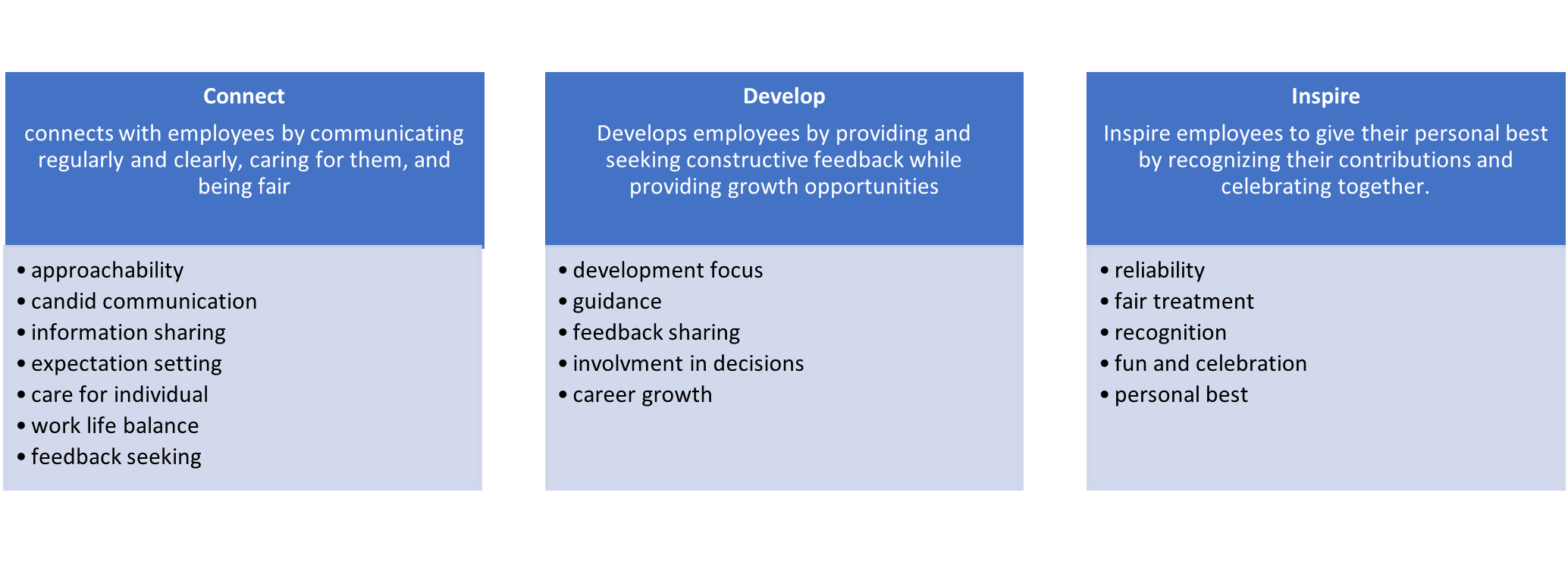
 Our research shows that strong leadership is built on three pillars – Connect, Develop, Inspire. When leaders and managers who build strong interpersonal connections with their team, take interest in the team’s personal and professional growth, and help team members connect with the big picture of the organisation, are more effective at fostering a high-trust high-performance culture in the organisation. 

Here are some examples of powerful manager-led people practises that create high-trust high-performance culture. 

CONNECT

Focussing on connect, Managers can build strong interpersonal connections and foster a sense of psychological safety within their team. 

Consider a practice like Toss the Ball. Every two weeks, a manager has a 30-minute “All videos on” meeting. In a meet, two team members are chosen to start the session. The nominated members toss and catch a paper ball (virtual actions). The individual who lands the ball must provide a one-line feedback to the opponent before tossing the ball to someone else. And the process repeats till 30 mins are up. This simple manager-led practice encourages openness, transparency, and psychological safety in the team. 

How are you doing? Is a practice to demonstrate empathy and douse crises arising due to poor planning. This is a fortnightly call with all team members, to give them progress and key updates on the project. In addition, ask them whether they are favourably inspired by their job and if they have any recommendations for improving it.

DEVELOP

Helping team members identify growth opportunities within the organization reinforces the feeling of being a valued member and cared for. Employees who see the possibility of growth at an organisation tend to stay longer.

FutureSync is a conversation between managers and their team members to set realistic expectations of career paths within the organisation. Two goals are set for the year, at least one of which has to be worked on with the manager and the other with the manager’s peers. This enables team members to get external perspectives in identifying strengths and blind spots in an unbiased manner. Additionally, the manager also provides guidance for learning support towards these objectives, ensuring a forward movement for every team member.

This simple practice, The Flying Book finds its roots in the philosophy of the art of giving. A manager at one of India’s largest pharmaceutical companies has initiated it with his team. He introduces a book (related to personal or professional growth) and every person who reads it must pass it on to the next person. This has led to a boost in knowledge sharing within the team and a focus on personal growth.

INSPIRE

There may have been a time when inspiring team members was seen as something only leaders would do, but that time is over. Today, best performing have identified ‘Inspiration and Appreciation’ as one of the biggest differentiators between them and their peers.

Letters of Mission. The manager encourages team members to develop their own “mission statement” that expresses who they are and how they want to contribute to the success of the firm. The letters are further posted on the company’s intranet. A salesperson from this FMCG organisation mentioned his mission as “to indelibly mark our confectionary brand on the heart of every child” and the logistics executive mentioned about “reliably providing our product to every customer, as and when they need it”. Colleagues are often inspired by personal mission statements. In fact, it changes the quality of conversations between peers and enables faster action.

Happy Lottery is a practice of expressing unconditional gratitude to everyone, by everyone. A box is placed on the floor which holds the name of each team member (including the manager). Every week at the end of the team catch-up, the manager picks a team member’s name through the Lottery system. Then the manager, followed by the other team members, shares a few words of gratitude and praise for the one whose name is pulled out. Simple yet profound way of focussing on the positive.

Perhaps your company already has a great work culture, and your managers are constantly reinforcing its values. So, what happens during a period of growth when there is a need to get more people onboard? Effective manager-led practices that are carefully curated may be great custodians of your company’s culture. They can serve as a beacon of light in times of change to every people manager in your organisation, including lateral hires and first-time managers.

Multi-sensory approach to Managing information overload at work.

In today’s day and age, one finds it hard to not be “always-on”. We live in a hyper-connected world both in our personal lives and professional avatars. The development of technology has allowed everything in our lives to take a multi-sensory approach, including people management.  There is an unsaid, yet underlined expectation to respond to texts, emails, calls, social media pings, etc. Failure to do so only sends more text, email, calls our way! Constant connection and information about everything, anything, everywhere has become a way of life for most working professionals. And yet how much information can our brain really process and retain? According to neuroscience, our brains are hardwired to forget, not to remember. In 2015, one statistic went viral: “humans have an 8-second attention span. Less than that of a goldfish! And it’s getting shorter!” While the statistic itself was false, it went viral but the message felt relatable – the losing battle with information overload, constant struggle of processing the endless stream of emotions not just information, frequently experiencing anxiety triggered by decreased working memory. 

Brand marketers and advertisers have recognised this very real crisis of human attention and interconnected action. Therefore, successful brands engage us through many of our senses, they use a multi-sensory approach. Have you noticed that commercials tend to be louder than the show you’re watching? Competing brands often use colour tones on the opposite ends of the spectrum when trying to stand out and almost the same in a mass market product line. Smooth flawless packaging of Apple products, screams “premium”. 

So if marketers can use a multi-sensory approach to land their message, why can’t managers? Adopting a Multi sensory approach can help slow down the forgetting curve. It helps increase understanding and retention of information. Managers can use the same multi sensory approach in people management to enhance team engagement by incorporating different sensory inputs into their communication style. A multi-sensory approach can accelerate team innovation by boosting creativity, improving cooperation, and encouraging varied viewpoints.

Fun at work is one of the key drivers of a great workplace. Eighty-one percent of employees at companies ranked as “great” described their office environments as fun. For most organisations the percentage is much lower. What most organisations fail to understand is that ‘fun’ is not about doing things outside of work to have fun, but about changing ways of working to make work more engaging and thereby fun. A multi sensory approach can achieve just that. Since taking this approach means once in a while moving away from routine business review and using a mix of Auditory, Visual, Kinaesthetic or Experiential modes to enhance the quality of communication and interaction. Here are some examples. 

Sensory Brainstorming Sessions

Traditional brainstorming sessions can be enhanced by incorporating multi-sensory elements. Consider offline tools such as chart papers, post its, colourful sketch pens and stickers. Managers can change the office dynamic to create an environment that stimulates the senses, such as playing inspiring music, displaying visually stimulating images or objects, or even introducing unconventional scents. This sensory stimulation can help team members think outside the box and generate innovative ideas.

Behaviour Spotlight Sessions

Drama, role play, storyboarding can be great tools to create a supportive and empathetic work environment that acknowledges the emotional aspect of teamwork. Helping team members express, recognize and validate each other’s emotions, both positive and negative, can foster better team dynamics and enhance communication. Organizations with great work cultures leverage role play to build awareness and skill on sensitive topics such as performance feedback, speak up culture and diversity.

Operating from a different working space

Change of work space can be a refreshing experience for the entire team. This could include working from a different branch office, accompanying a team member for a field trip, informal visits to museums or exhibitions, visit to a team member’s home or virtual reality experiences that expose team members to different environments and perspectives. Change in the working environment can break the monotony of everyday work, encourage new connections and spark fresh ideas. In the Indian context for a vast majority of employees, a manager’s attempt to build a connection with the team member’s family demonstrates respect and care for the team member.

Visual Communication

Managers often use visual aids such as charts, graphs, and diagrams to convey information and objectives effectively. Visuals help team members grasp complex concepts, see the big picture, and understand data more easily. However, a new language for communication is emerging – Memes! Memes are a powerful way for team members to candidly express themselves. Memes forge a sense of belonging by helping team members to have a directory of inside jokes. They can also lighten the mood and add humour to an otherwise mundane conversation. But memes can do more than add humour. They are effective tools for boosting morale and creating a psychologically safe environment.

Design Thinking Workshops

Design thinking workshops often utilize multi-sensory techniques to foster innovation. Managers can guide their teams through activities that involve sketching, prototyping, role-playing, and physical interactions. These hands-on experiences help team members approach problems from different angles and uncover unique solutions.

Visualization and Storytelling

Visual and auditory storytelling techniques can be employed to inspire innovation. Managers can encourage team members to create visual representations of ideas or concepts using mind maps, sketches, diagrams, or storyboards. Additionally, storytelling can be used to communicate the vision, purpose, and potential impact of innovative ideas, making them more tangible and relatable to the team.

Doodling during meetings

According to research, when we doodle, the brain is actually paying more attention and remembers more information. By providing a creative release it helps with mental health. One study showed that doodling activates the brain’s reward pathways.

Floor Walks

And if all of the above seem out of reach, take to the simple, time tested and well researched ‘floor walk’. It has proven to be a powerful tool to build engagement, finding better ways of working, facilitating bottom up communication, enhancing leadership visibility and brand to name a few benefits.

Remember, the key is to create an inclusive and supportive environment where team members feel comfortable engaging their senses and sharing their ideas. By leveraging a multi-sensory approach in people management, managers can stimulate innovation, break through traditional thinking patterns, cultivate a culture of creativity and exploration and infuse fun at work.

References

Help Managers create a culture of listening

Tim Cook, the chief executive officer of Apple Inc., is one of the most influential CEOs of all time. Recently, he was ranked No. 4 in a list of the world’s best CEOs for 2023 in the CEOWORLD magazine. One attribute he possesses that distinguishes him from other leaders is his listening skills. Most people who have been in a meeting room with Tim recount him maintaining deliberate periods of silence in meetings where he listens without interrupting or reacting whatsoever.  However, he is the exception, not the rule. 

Two out of every three (63%) workers, globally, feel that their managers or employers fail to just listen.  In India 17 out of every 20 employees (86%) hold this view. Amongst the younger workers a whooping 93% hold this view – the highest of any country surveyed. This perhaps begs the question – is listening a skill that can be developed? And if it is – is there enough opportunity to do so?

While there is a lot of research on developing the skill to listen, but the opportunity to  practice listening is less. In 2015, a study of business schools found that while 78% of schools list “Presenting” as a learning goal, only 11% listed “Listening” as one. Even with ample opportunity to practice, managers may be faced with the challenge of deciphering the most effective way to listen across multicultural and multi-generational workplaces. 

Helping managers understand and appreciate the nuances of effective listening can help them build more successful relationships at work. The 3 nuances that managers can pay more attention to, to become better listeners are.

  1. What are you listening to? What is being said or the manner in which it is said. Managers will concur that younger employees or those working in particular sectors tend to “say what they mean” more frequently. Whereas in certain teams, context and body language, rather than words, might be significantly more useful in comprehending what an employee is saying.
  2. How much to pause while responding? Some workplace cultures accept interrupting someone mid-sentence to make a point, common and normal. It is not taken as a sign of the other person not listening to what is being said. Whereas letting the other person finish before you respond is seen as a marker for active listening. 
  3. What purpose should listening serve? This is a tricky one – for managers the purpose of listening is usually to build consensus or agreement. Whereas most employees report that if they feel heard and understood, they feel comfortable committing to a decision that they may have originally disagreed with. 

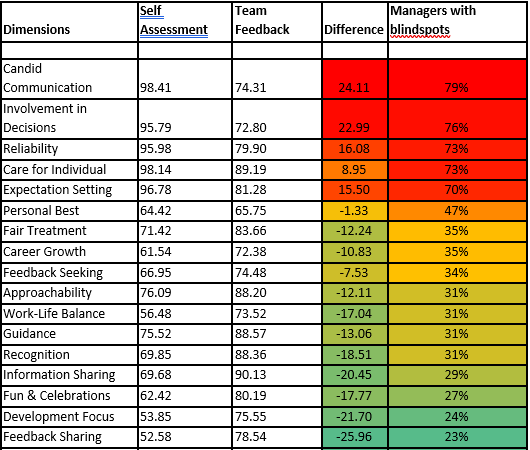
An effective way to check active listening in the organisation, is to check if senior management is taken by surprise by the nature of feedback received from employees. Leaders in great workplaces are usually aware of challenges and issues faced by their employees. In these organisations, feedback surveys serve the purpose of validating issues leaders have been hearing in their rather than a tool of discovering employee challenges. When leaders are surprised by survey feedback it is an indicator of gaps in the listening at the senior most level of the organisation. And since culture flows from the top, this could be an indicator of an organisation wide problem. 

Below are 5 tried and tested practices that can make your leaders and managers better listeners. 

Listening Tours

Listening tours are a valuable tool for leaders to gather feedback, understand employee perspectives, and build stronger relationships with their teams. Making listening tours part of leadership itinerary every quarter will not only improve their listening but will also help them build a stronger leadership brand.  Listening tours can be powerful tools for managers too, to gather valuable insights, improve employee engagement, and drive positive change. By actively listening and taking meaningful actions based on the feedback received, managers can enhance team dynamics, boost morale, and foster a culture of trust and collaboration.

Dreamcatchers practice

Through the Dreamcatchers practice, managers at a leading tech company gather workplace dreams of team members through personal talks, or emails or suggestion boxes. In addition to their dreams, the team member can suggest ideas on how their dream can be turned into reality. Managers in this organization have fostered the culture of innovative entrepreneurship simply by listening and responding to the dreams of their team members. This is a great example of Organizational citizenship behavior in action.

Informal Catch ups

It is a common practice in manufacturing companies to organize dinner after all reviews. This helps the senior management employees to meet informally and interact with employees to capture their feedback and understand any issues they face. Managers can also use informal settings like these to gather suggestions and feedback not only on the reviews, performance appraisal etc. but on generic issues troubling employees.

Birthday Chats

In a leading MNC, Birthday Chats feature as one of the most effective listening tools. These take place every two months and are hosted by the CEO. There is no agenda other than giving employees the opportunity to ask questions directly to the CEO in an unguarded environment. Conversations normally cover a wide range of topics such as recent successes, business direction, stock price, economic environment to name but a few, employee benefits to name a few

Role Confrontation Sessions

The HR associates at a leading engineering multinational with Indian roots conduct Role Confrontation Sessions for various teams as per their need. The whole session is about members and managers confronting the truth about their role, handling the feedback with utmost maturity and then together as a team coming to a solution for the betterment of the entire team. This intervention truly binds the team together and reduces ambiguity related to each member’s role. Managers can use this practice to build trust and transparency in their department where people ask questions and get answers in a direct manner.

In summary, while listening is a learnable skill, organizations with great listening cultures don’t leave listening to the manager’s skill level. Instead, they use deliberate, meticulous practices to make listening possible at the highest levels of the organization.

References